Cascading hazards lake county
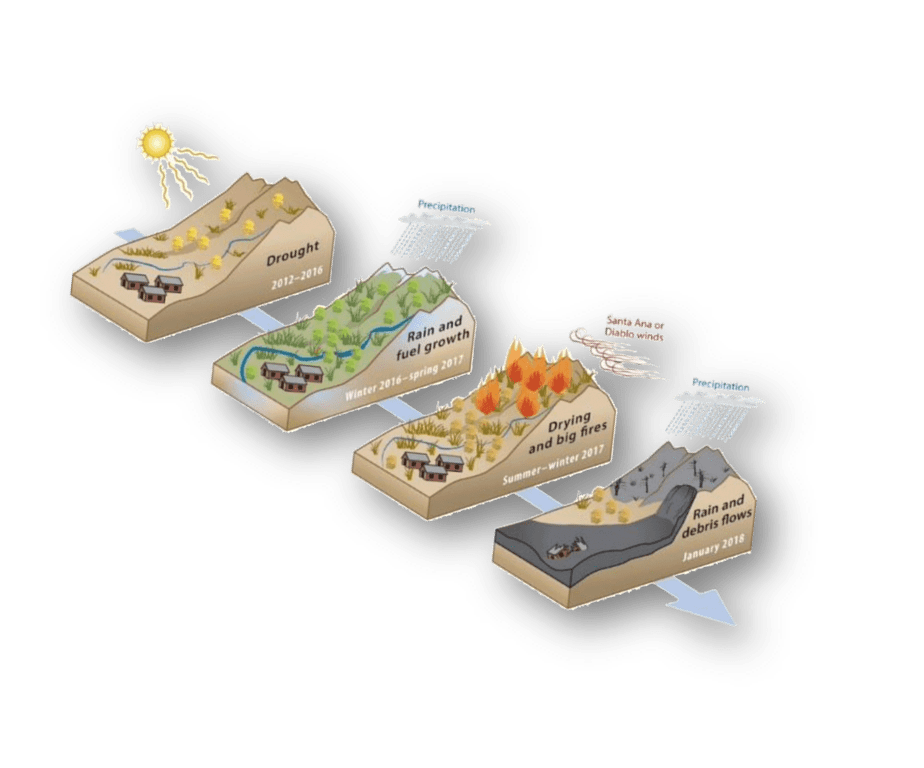
The overarching goal of this multidisciplinary project is to understand and reduce the vulnerability of disadvantaged communities to the impacts of wildfire-related cascading hazards. Wildfires are worsening in several regions, including the Western United States, and are commonly followed by a chain of cascading geohazards (e.g., debris flows, landslides). These cascading hazards further impact nearby communities and the built environment, with more pronounced effects in disadvantaged communities. Preparedness is commonly the largest aspect of community resilience to wildfires and the associated cascading hazards but is typically isolated to single events. Cascading hazards place disadvantaged communities at risk for disastrous outcomes, which are projected to worsen with climate variability and change.
The project involves collaboration with California Office of Emergency Services (CalOES) and focuses on Lake County, CA, a rural region that is home to several vulnerable communities and growing multi-hazard threats. While applied to a sequence of drought, wildfires, landslides, and flooding, this framework is directly translatable to any set of cascading hazards and will advance the state-of-knowledge to go beyond hazard evaluation that typically focuses on a single event.
More About This Project→
 Lake County Cascading Hazards